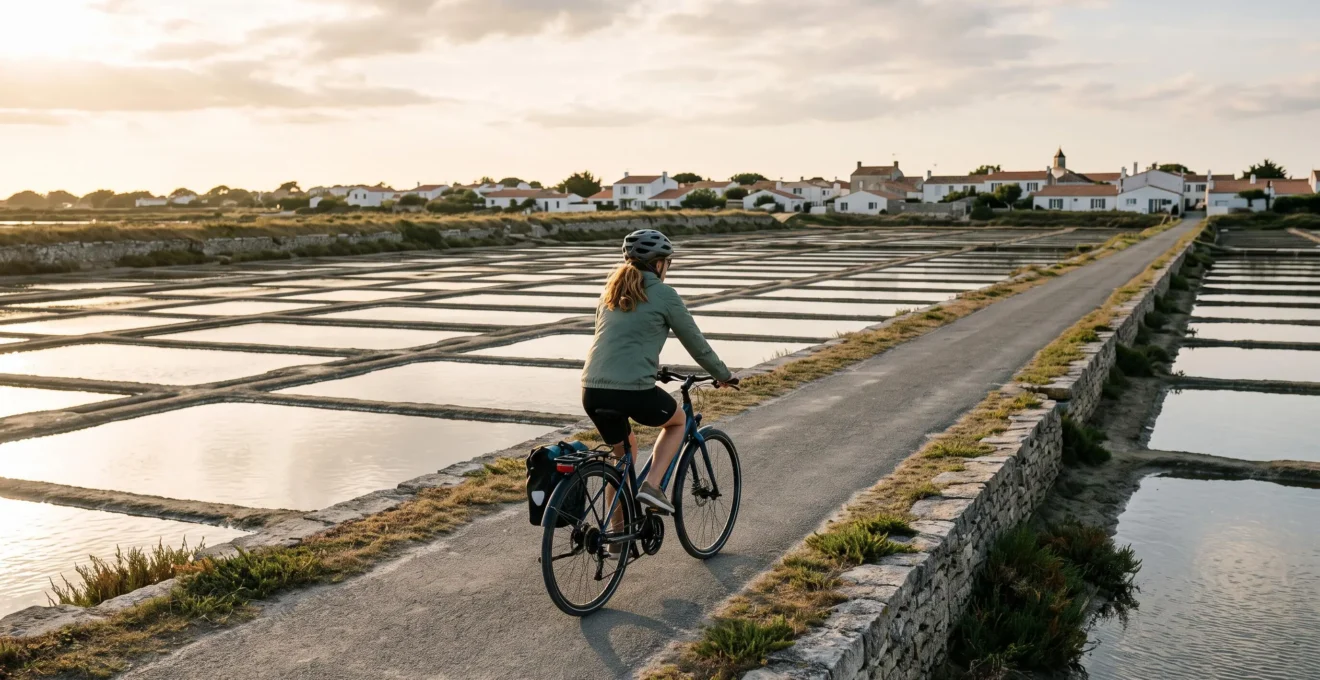
Exploring the Île de Ré by bicycle is genuinely straightforward once you’ve made three choices: which route fits your time, which bike type suits your comfort, and when to ride to avoid the biggest crowds. The island is well set up for cycling, so you can move between villages, beaches, and salt marshes without relying on a car for every short hop.
Direct answer: To explore the Île de Ré by bike, base yourself in one village, use the island’s signposted cycle path network for most transfers, pick a route matched to your available half-day or full day, and rent a bike that matches your planned comfort level (standard vs e-bike, with/without child gear). Start early in peak season and build in water and shade stops.
Your quick plan for cycling the Île de Ré
- Choose a time frame: half-day loop for an easy first ride, or a full-day village-to-village day.
- Rely on the network: the island counts about 138 km of cycle routes (community and municipal itineraries).
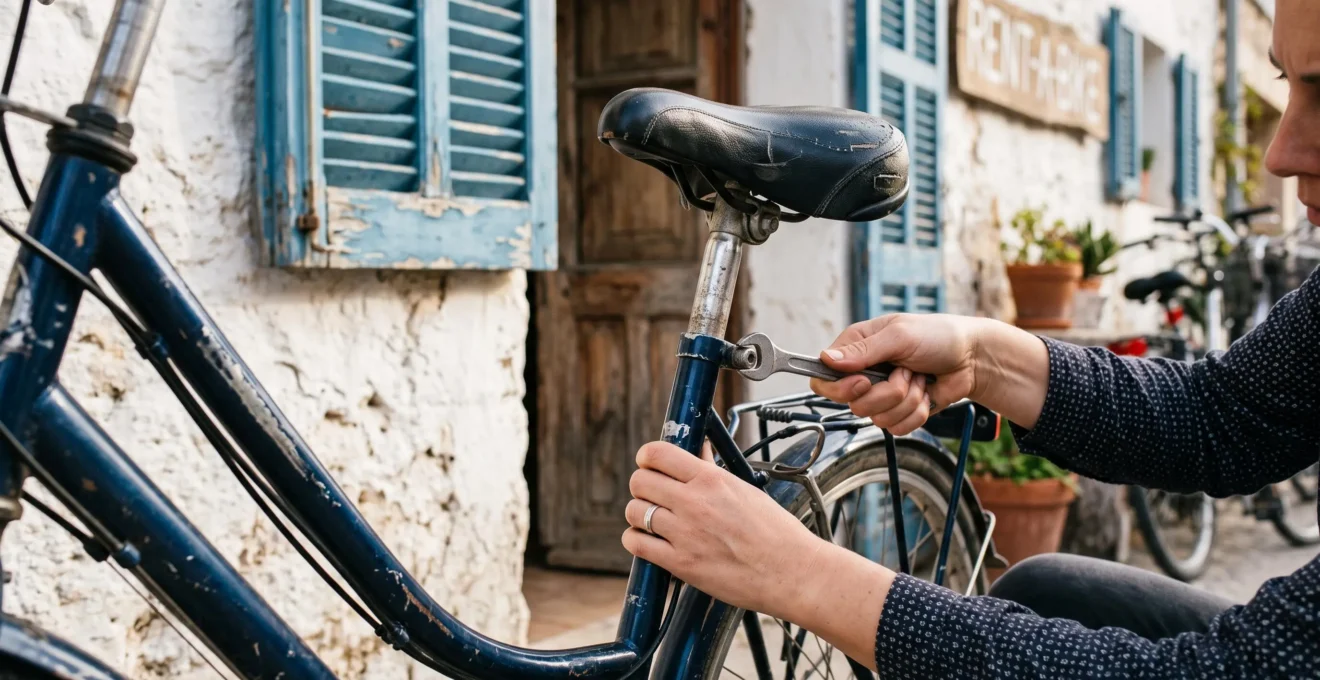
- Rent smart: book ahead in high season and check brakes, tires, saddle height, lights, and the lock before leaving.
- Ride at the right time: mornings are calmer in summer; shoulder seasons can feel easier for beginners.
- Keep it flexible: plan one “must-see” stop, then add extras if you’re ahead of schedule.
Why the Île de Ré Is Best Explored by Bicycle
If you’re hesitating between car and bike, the bike usually wins on the Île de Ré for one practical reason: it keeps your day moving. Short village-to-beach hops can become slow by car in busy periods (traffic, parking, narrow streets), while cycling lets you roll directly to beaches, marsh paths, and small hamlets with fewer “logistics breaks.”
The island is also beginner-friendly: the terrain is generally flat, and the network is designed around everyday connections between villages, not just “sport” rides. According to the schéma directeur cyclable de l’île published by the Communauté de Communes de l’Île de Ré, the island has about municipal and inter-municipal cycle itineraries 138 km (presented as an approximate figure).
Another advantage: you can keep your schedule light. For example, on a warm afternoon you can leave your village, reach a beach, and be back for a shower and dinner without having to plan around parking or driving “just in case.” That’s exactly the kind of low-stress rhythm that makes exploring the Île de Ré by bicycle feel local rather than rushed.
Good to know : The official Île de Ré Tourist Office states there are bike hire points in all 10 villages, which makes it easy to start cycling even if you arrive without equipment.
How the Cycle Path Network Works
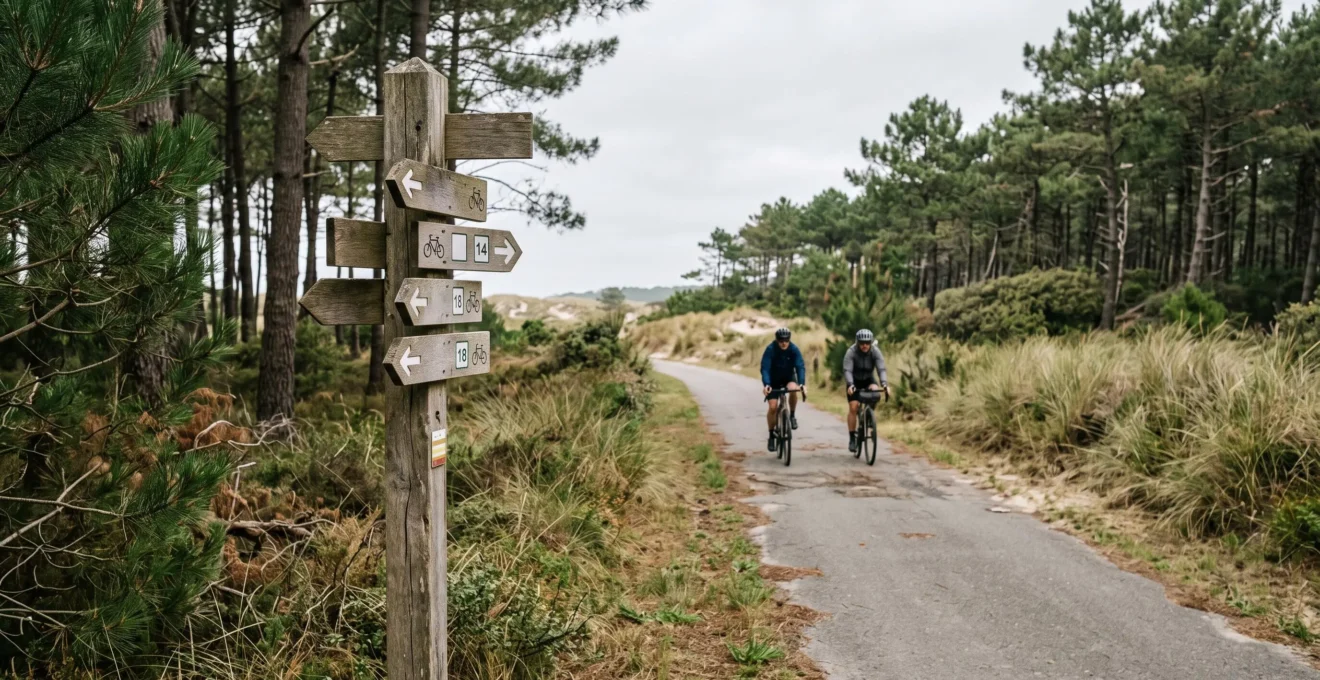
The cycle path network Île de Ré uses is a mix of dedicated cycle tracks and shared sections where cyclists mix with other users or traffic. In practice, you’ll often ride on separated paths between villages, then slow down and share space when entering a village center, approaching a harbor, or crossing certain junctions.
To reduce wrong turns, don’t rely only on “one perfect loop.” Instead, think of the island as a set of connected links: village to village, village to beach, village to marsh viewpoint. The points de location officiels sur l’île page from Destination Île de Ré Tourist Office also points riders to local safety guidance (“Sécu-Rétais”), which is useful if you want to double-check on-the-ground rules and etiquette before riding.
On shared sections, your comfort comes from habits more than speed: keep right, anticipate walkers and kids, signal clearly, and slow down early when the path narrows. At junctions, assume other users may not look over their shoulder—especially in summer when many riders are occasional cyclists.
Night riding needs extra attention. French rules can require lighting and reflective equipment depending on conditions and visibility; if you plan to cycle after dark, confirm the current requirements locally and make sure your rental includes working lights.
The Best Cycling Routes on the Île de Ré
The simplest way to pick Île de Ré bike routes is to match them to (1) your available time and (2) your least confident rider. Without verified route distances and timings in the sources provided, the safest approach is to plan by effort: choose a short, flat loop for your first ride; keep a longer village-to-village day for when you’ve confirmed your pace and comfort on local paths.
- You have 2–3 hours and want an easy first ride:
Choose a short loop around your base village, aiming for one main stop (beach or salt marsh viewpoint) and a return via a different path.
- You have a half-day and want classic “postcard” scenery:
Plan a village-to-village ride with a single long stop (market, harbor, or beach), then return early enough to avoid late-afternoon crowds on shared sections.
- You have a full day and want to cover more ground:
Build your day around two villages plus one nature area, and keep a buffer so you can stop when a path gets busy or windy.
- You’re riding with children or nervous riders:
Prioritise separated paths and short segments; keep options to turn back at any junction rather than committing to a “big loop.”
Saint-Martin-de-Ré to Ars-en-Ré: how to approach it safely
This is a popular “spine” idea for visitors because it connects well-known villages. With the documentation provided here, I can’t quote an official distance or riding time for this exact route. What you can do confidently is treat it as a longer village-to-village ride: start earlier than you think, plan at least one substantial break, and decide in advance whether you’ll return the same way or via a different connection based on how you feel after the first leg.
If you’re unsure about your fitness, this is exactly the situation where an e-bike can turn a stressful day into a comfortable one—especially if you plan to stop often for photos, beaches, or markets.
Loix salt marshes loop: a low-effort scenic outing
If you want salt marsh scenery without committing to a full-day itinerary, build a short loop around Loix focused on marsh viewpoints and quiet paths. Keep the total ride time to what feels easy for you (for many beginners, that means a relaxed outing where you can stop frequently). Because marsh paths can feel exposed, bring water and a light layer even when the weather looks calm.
Cas pratique
You’re staying as a couple in Saint-Martin-de-Ré for 3 days, and you’re unsure how ambitious to be. Day 1: rent bikes for a half-day and do an easy loop to a beach and back to validate comfort (saddle height, traffic tolerance, pace). Day 2: pick a longer village-to-village ride with one fixed stop (market or harbor). Day 3: keep a short marsh-focused loop as a flexible “weather-proof” ride.
Family-friendly coastal rides: how to keep them stress-free
With children, the main risk isn’t hills—it’s decision fatigue and busy junctions. Keep rides short, choose separated paths whenever possible, and plan “reward stops” (ice cream, beach, playground) so the ride doesn’t become a test of endurance.
- Distance approach: choose a short out-and-back or small loop so you can turn around easily.
- Difficulty approach: prioritise quiet paths and avoid village centers at their busiest times.
- Timing approach: ride earlier in the day, then stop for a longer beach break when paths get crowded.
If you want a broader mindset for travelling this way in other destinations too, this internal piece on cycling locally may help you set expectations around pace, stops, and navigation.
Renting a Bike: What to Check Before You Ride?
To rent a bike in Île de Ré without surprises, start with the route you’ve chosen: a standard city bike is fine for short, flat outings; a hybrid can feel steadier for longer days; an e-bike can be the difference between finishing tired and finishing happy if you’re unsure about fitness or you want to cover more in one day. If you need a child seat or trailer, reserve early and ask exactly what’s included.
The official Tourist Office notes that bike hire points exist across all ten villages (so you can often rent close to where you’re staying). What varies is availability at your preferred time and the exact equipment quality—so booking ahead is the simplest way to protect your schedule during peak season.
- Fit and comfort
Adjust saddle height so you can pedal smoothly without rocking your hips; check the handlebar position feels stable.
- Brakes and tires
Test both brakes while walking the bike; squeeze tires for firmness and look for obvious damage.
- Safety and security
Confirm you have a working lock, and check the lights if you might ride near dusk or at night.
- Practical carrying
If you’ll shop at markets or carry beach gear, ask for a basket or pannier option so your shoulders don’t do the work.
Helmet rules in France depend on age and situation; if you’re travelling with children, confirm current requirements and shop policy when you collect the bikes. Even when it’s not mandatory for adults, many riders still choose a helmet for comfort—especially on shared sections or when the island is busy.
Peak-season reality check : If you wait until late morning to rent in high season, you may have fewer bike sizes or child options available. Reserving is mostly about protecting your time.
When to Go and How to Plan Your Trip?
The best time to cycle the Île de Ré depends on what you value more: warm beach weather or quieter paths. With the sources provided, I can’t cite official month-by-month crowd statistics or climate averages, so use a practical rule: if you’re a beginner or dislike busy shared paths, aim for shoulder periods and ride early in the day when you’re there in summer.
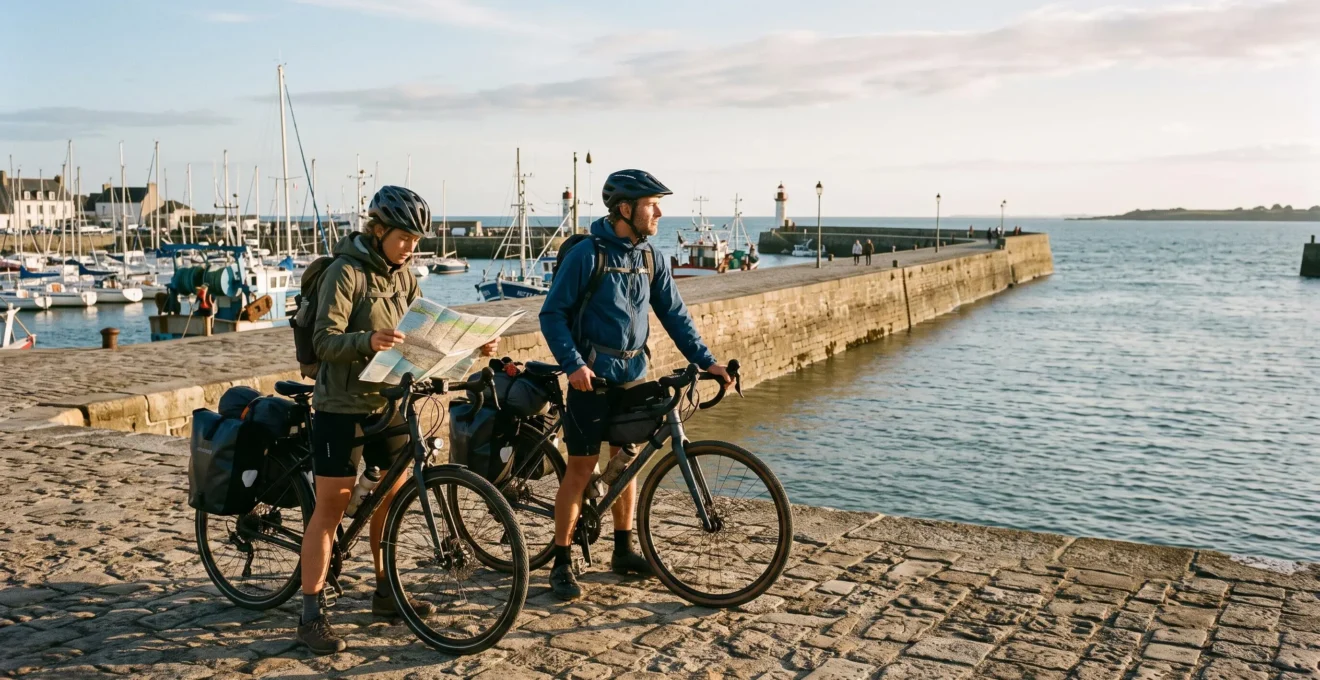
For day-to-day planning, treat cycling like a simple chain: rent/collect early, ride your longest segment first, then stop for your main visit (market, beach, village center) before returning when you still feel fresh. That structure prevents the classic mistake: drifting into “just one more stop,” then riding back when you’re tired and paths are busiest.
A simple one-day plan for a short stay
If you only have one day, keep your ambition realistic: one longer ride plus one “anchor” visit is enough to feel the island. Here’s a safe structure you can adapt to any base village without needing exact kilometre counts.
- Morning: pick up bikes early
Do your 3-minute safety check, set saddle height, and confirm lock + lights.
- Late morning: ride your longest segment first
Ride out while energy is high and paths are calmer, then decide whether to extend based on how you feel.
- Midday: one main stop
Choose one: market, beach, or village harbor. Eat and drink properly before heading back.
- Afternoon: return on a simpler line
Prefer an easy return route, with an optional short detour only if you have time and energy.
- End of day: return bikes with margin
Give yourself buffer time so a slow section or an extra stop doesn’t turn into stress.
Is it easy to cycle around the Île de Ré?
Yes for most visitors, because the island is generally flat and supported by a large cycle network. The Communauté de Communes de l’Île de Ré reports about 138 km of municipal and inter-municipal cycling itineraries (approximate figure). The main challenge is not difficulty, but busy shared sections in peak season—so ride earlier and keep routes flexible.
How many days do I need to explore the Île de Ré by bike?
With 2–3 days, you can usually cycle different “sides” of the island without rushing: one easy loop to get comfortable, one longer village-to-village day, and one short scenic ride (salt marshes or coastline). With one day, you’ll get the best experience by choosing one longer ride plus one main stop rather than trying to “do it all.”
Which bike should I rent for the Île de Ré?
Pick the bike that matches your least confident rider and your longest planned day: a standard city bike works for relaxed half-days, a hybrid can feel more stable for longer rides, and an e-bike is helpful if you’re worried about fitness or want to link more villages without stress. If you need child equipment, reserve ahead and confirm what’s included at pickup.
Are the cycle paths suitable for a family ride?
Often yes, provided you keep distances short and avoid busy times and junctions. Plan rides around separated paths where possible, add frequent stops, and choose out-and-back routes so you can turn around easily if a child gets tired.
When is the best time to cycle the Île de Ré?
If you want the calmest riding, shoulder periods and early departures usually feel easiest. In summer, starting in the morning helps you avoid the busiest shared sections and makes heat management simpler (more shade breaks, more time to refill water).
If you take one thing from this guide, make it this: exploring the Île de Ré by bicycle is less about finding the “perfect” route and more about choosing a realistic daily shape—short first ride, clear main stop, and a bike that feels comfortable. Once those decisions are made, the island’s connected network and village-to-village rhythm do the rest.