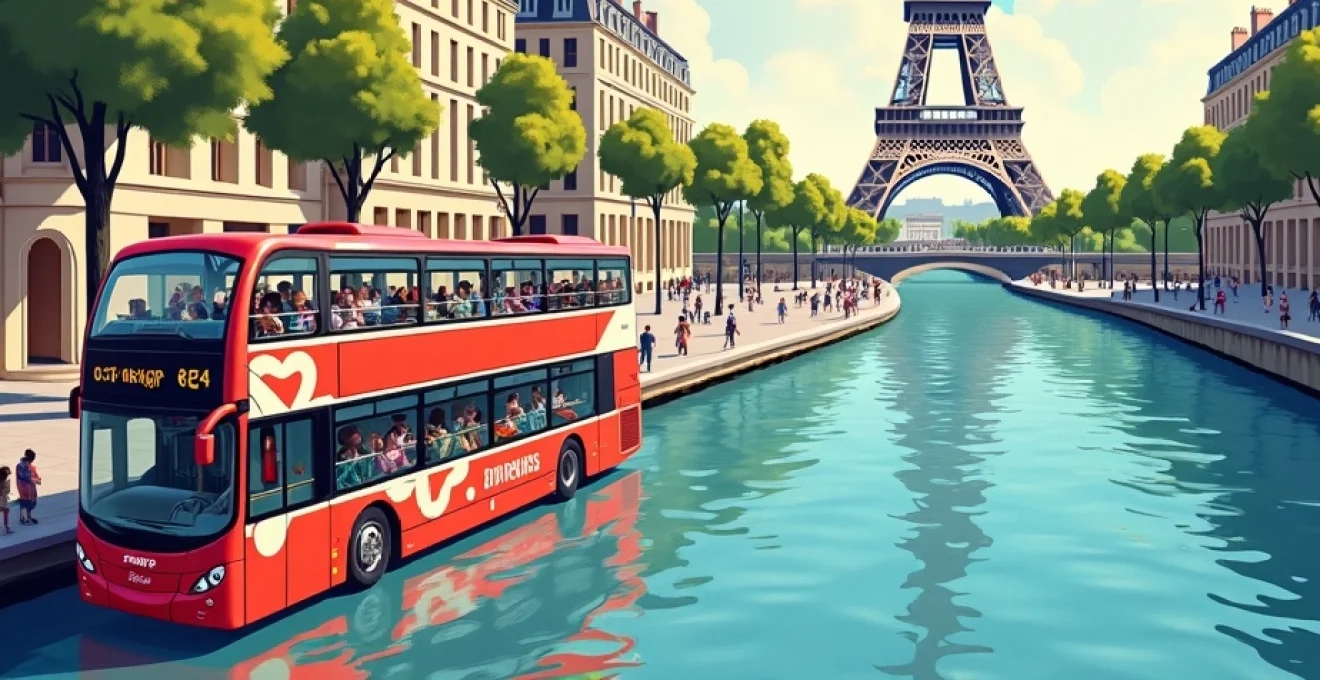
Paris reveals its treasures through multiple layers of exploration, from the convenience of guided bus tours that showcase iconic landmarks to the intimate discovery of hidden neighborhoods where authentic Parisian life unfolds. The City of Light offers visitors a remarkable spectrum of experiences, whether you prefer the structured comfort of hop-on hop-off circuits or the spontaneous adventure of wandering through lesser-known districts where street art galleries emerge from industrial passages and bohemian enclaves preserve their artistic heritage.
Modern travelers increasingly seek authentic experiences that balance accessibility with discovery. The strategic combination of organized transportation methods and independent neighborhood exploration creates opportunities to understand Paris beyond its postcard image. Digital navigation tools now enable adventurous visitors to venture confidently into districts that remain largely untouched by mass tourism, while seasonal timing considerations ensure maximum accessibility to both famous attractions and hidden gems.
Curated bus tour routes through iconic parisian districts
Paris bus tour operators have evolved their offerings to provide comprehensive coverage of the city’s most significant cultural and historical areas. These curated routes serve as an excellent foundation for understanding the geographic layout of Paris while providing commentary that contextualizes the landmarks within their broader historical and cultural significance.
Hop-on Hop-Off circuit analysis
The hop-on hop-off bus market in Paris features several operators, with Tootbus representing the most comprehensive network coverage options. Tootbus operates four distinct routes covering 35 stops, including specialized circuits for Montmartre and the business district of La Défense. Their integration with the Tootwalk audio-guided walking tours creates a seamless transition from bus-based sightseeing to pedestrian exploration, allowing visitors to experience the best of Paris with a sightseeing bus while maintaining flexibility for deeper neighborhood discovery.
Seine river integration routes: Bateaux Parisiens combined tour packages
The integration of Seine river cruises with bus tours represents an evolution in Paris sightseeing that maximizes the city’s unique geography. Bateaux Parisiens offers combination packages that include both bus circuit access and river cruise tickets, creating a comprehensive perspective of Paris from multiple vantage points. The Seine provides unobstructed views of landmarks often partially hidden by urban development when viewed from street level.
These combined packages typically include bateau-mouche cruises that operate on regular schedules throughout the day, with glass-covered vessels ensuring year-round comfort. The river perspective reveals architectural details and urban planning elements that become apparent only from water level, particularly around Île de la Cité and Île Saint-Louis. Evening combinations featuring illuminated monuments create particularly memorable experiences, with the golden hour light transforming familiar landmarks into photogenic subjects.
Specialized thematic circuits: Montmartre artist trail and Latin Quarter literary tours
Specialized thematic circuits cater to visitors with specific cultural interests, moving beyond general sightseeing to provide focused experiences. The Montmartre Artist Trail follows the footsteps of Impressionist painters including Renoir, Toulouse-Lautrec, and Picasso, stopping at former studios, cafés where artistic movements were born, and viewpoints that inspired famous paintings. These tours typically include access to the Musée de Montmartre and guided walks through the cobblestone streets of the Butte.
Latin Quarter Literary Tours concentrate on the neighborhood’s rich intellectual heritage, visiting locations associated with writers including Hemingway, Joyce, and Gertrude Stein. The circuit includes stops at Shakespeare and Company bookstore, the Panthéon where literary figures are entombed, and cafés that served as meeting places for the Lost Generation. These specialized tours often incorporate skip-the-line access to relevant museums and monuments, adding substantial value beyond basic transportation.
Night illumination bus routes: Champs-Élysées to Tour Eiffel evening circuits
Paris transforms dramatically after sunset, with strategic illumination highlighting architectural details invisible during daylight hours. Evening bus circuits capitalize on this transformation, following routes specifically designed to showcase the city’s illuminated landmarks. The classic Champs-Élysées to Tour Eiffel circuit provides optimal viewing angles for the Eiffel Tower’s hourly light show, while timing stops to coincide with the most dramatic lighting conditions.
These evening routes typically operate from April through October, taking advantage of longer daylight hours and warmer weather that encourages outdoor sightseeing. The circuits include strategically timed stops at Place de la Concorde, where fountain illumination creates dramatic reflections, and along the Seine where riverside lighting creates atmospheric conditions for photography. Some evening tours incorporate champagne service or dinner options, elevating the experience beyond simple transportation.
Underground alternative district exploration beyond tourist corridors
Paris contains numerous neighborhoods that remain largely unknown to mainstream tourism, preserving authentic community character while offering unique cultural experiences. These districts require more adventurous navigation but reward explorers with genuine local atmosphere and discoveries unavailable in heavily touristed areas.
Belleville street art quarter: Rue Dénoyez graffiti galleries and artist collectives
Belleville represents one of Paris’s most dynamic street art districts, where legal graffiti walls coexist with established galleries and artist collectives. Rue Dénoyez serves as an open-air gallery where commissioned murals change regularly, creating an ever-evolving artistic landscape. The narrow alleyway hosts monthly art events where visitors can observe artists at work and purchase original pieces directly from creators.
The surrounding Belleville neighborhood features numerous artist studios housed in former industrial buildings, many offering monthly open studio events during the first weekend of each month. These events provide access to working spaces typically closed to the public, offering insights into contemporary Parisian artistic production. The area’s multicultural character contributes to diverse artistic expressions, with influences from North African, Asian, and Eastern European immigrant communities visible in both street art and gallery exhibitions.
Canal Saint-Martin bohemian enclave: République to Stalingrad waterway discovery
The Canal Saint-Martin corridor stretches from République to Stalingrad, creating a linear park system that serves as a gathering place for young Parisians and creative professionals. The waterway’s tree-lined banks provide picnic areas where locals congregate during warm weather, while historic iron bridges create scenic backdrops for leisurely walks. This area exemplifies the art de vivre that defines contemporary Parisian lifestyle.
Independent boutiques, vintage shops, and artisanal food establishments line the streets parallel to the canal, creating a commercial ecosystem that caters to local residents rather than tourists. The Sunday market at Marché Saint-Germain provides organic produce and artisanal products, while evening aperitif culture transforms canal-side areas into impromptu social spaces. The neighborhood’s authentic character remains largely intact despite increasing recognition in travel publications.
Père Lachaise surrounding villages: Ménilmontant and Charonne historic passages
The neighborhoods surrounding Père Lachaise Cemetery preserve village-like character within urban Paris, featuring narrow cobblestone streets and historic passages that date to medieval times. Ménilmontant retains working-class character with traditional bistros and family-owned shops that have served local residents for generations. The area’s elevated position provides unexpected views of central Paris, particularly from Parc de Belleville.
Charonne maintains its historic identity through preserved architecture and traditional commercial establishments. The district’s passages, including Passage de la Bonne-Graine, contain artisanal workshops and small galleries accessible only on foot. These areas provide insight into residential Paris where daily life continues according to local rhythms rather than tourist schedules, offering authentic experiences for visitors willing to explore beyond conventional boundaries.
13th arrondissement Asian Triangle: Tang Frères market district navigation
The 13th arrondissement’s Asian Triangle represents Europe’s largest Asian community outside of London’s Chinatown, centered around the Tang Frères supermarket complex. This district provides authentic Asian cultural experiences, from traditional medicine shops to restaurants serving regional specialties unavailable elsewhere in Paris. The area’s architecture combines 1970s urban planning with Asian commercial aesthetics.
Navigation through this district reveals multiple layers of Asian immigration to Paris, with Vietnamese, Chinese, Cambodian, and Laotian communities maintaining distinct cultural spaces within the broader neighborhood. Food markets offer ingredients and prepared foods that attract Asian residents from throughout the Paris region, creating a genuinely local atmosphere. The district’s authentic character provides cultural immersion opportunities for visitors seeking experiences beyond typical European tourism.
Strategic neighborhood selection using metro line intersections
Paris Metro line intersections serve as strategic decision points for neighborhood exploration, with major transfer stations typically located at the centers of distinct districts. Understanding the relationship between Metro accessibility and neighborhood character enables efficient exploration planning while ensuring easy returns to central areas or accommodation.
The most productive exploration strategy involves selecting neighborhoods accessible via direct Metro connections from major hubs including Châtelet-Les Halles, République, and Nation. These intersections provide access to both established tourist districts and emerging neighborhoods within single Metro journeys. République serves as a particularly valuable base for exploring eastern Paris districts including Canal Saint-Martin, Belleville, and the Marais, while maintaining easy connections to central landmarks.
Timing considerations become crucial when planning multi-neighborhood exploration days. Morning departures allow maximum time in target areas before afternoon crowds, while evening returns coincide with aperitif culture in many districts. Weekend schedules may require adjustments due to reduced Metro frequency, but also provide access to markets and events unavailable during weekdays.
Strategic positioning near Metro intersections transforms seemingly distant neighborhoods into accessible destinations, enabling authentic cultural experiences without sacrificing convenience or safety.
The relationship between Metro line directions and neighborhood accessibility varies significantly throughout Paris. Lines extending toward suburban areas often provide access to districts with lower tourist density but maintain urban character. This pattern enables discovery of authentic Parisian neighborhoods while ensuring reliable transportation back to central areas or evening dining locations.
Digital navigation tools for Off-the-Beaten-Path discovery
Modern digital navigation tools have revolutionized independent urban exploration, providing capabilities that enable confident venture into unfamiliar neighborhoods while maintaining awareness of transportation options and local services. These applications integrate real-time data with local knowledge to support authentic discovery experiences.
Citymapper advanced features: Real-Time transit integration for district hopping
Citymapper represents the gold standard for Paris navigation, offering real-time transit information integrated with walking directions and alternative transportation options. The application’s district-hopping capabilities enable seamless movement between neighborhoods by calculating optimal routes that combine Metro, bus, and pedestrian segments. Advanced features include disruption alerts that suggest alternative routes during strikes or maintenance periods.
The app’s crowd-sourced data provides insights into optimal timing for specific routes, helping users avoid peak congestion periods that could impact exploration schedules. Integration with bike-sharing systems and scooter rentals creates flexible transportation combinations that adapt to changing conditions throughout the day . The offline capabilities ensure functionality even in areas with limited cellular coverage, providing essential backup navigation support.
Google Maps offline territory marking: Pre-Downloaded quartier boundaries
Google Maps offline functionality enables preparation for neighborhood exploration by pre-downloading specific district boundaries and surrounding areas. This capability proves essential when exploring areas with limited cellular coverage or when managing data usage during extended walking tours. The offline maps include detailed street layouts, business listings, and landmark identification.
Pre-downloaded territories should encompass target neighborhoods plus surrounding areas to account for spontaneous exploration opportunities. The system maintains functionality for saved locations, navigation directions, and basic search capabilities even without internet connectivity. Regular updates ensure accuracy of business information and route options, while starred locations create personalized reference points for future visits.
Foursquare local discovery algorithm: hidden gem restaurant and café identification
Foursquare’s local discovery algorithm analyzes user behavior patterns to identify establishments popular with residents rather than tourists. The platform’s tip system provides insights from local users about optimal ordering strategies, timing considerations, and cultural etiquette that enhance authentic experiences. This crowdsourced intelligence proves particularly valuable for identifying neighborhood cafés and restaurants that maintain local character.
The algorithm prioritizes establishments with high local-to-tourist ratios, filtering results to emphasize authentic neighborhood spots. User-generated photos and tips provide realistic expectations about atmosphere, service style, and menu offerings. Integration with other mapping platforms enables seamless navigation to recommended locations while maintaining access to additional context and reviews.
Seasonal timing optimization for maximum district accessibility
Parisian neighborhood exploration varies significantly across seasons, with weather conditions, daylight hours, and cultural programming affecting accessibility and experience quality. Understanding these seasonal patterns enables optimal timing decisions that maximize discovery opportunities while ensuring comfortable exploration conditions.
Spring and early summer provide ideal conditions for extended walking tours and outdoor market visits, with longer daylight hours and comfortable temperatures encouraging leisurely neighborhood exploration. Many outdoor events and festivals occur during this period, providing additional cultural context for district visits. The blooming season creates particularly photogenic conditions in areas featuring parks or tree-lined streets, while café terraces expand their outdoor seating areas.
Winter exploration requires different strategies but offers unique advantages including reduced tourist density in many areas and the opportunity to experience authentic indoor Parisian culture. Covered markets, museums, and traditional bistros become more appealing during cold weather, while holiday decorations and seasonal events provide special atmospheric conditions unavailable during other periods.
Seasonal timing decisions significantly impact both the accessibility and character of neighborhood exploration, with each period offering distinct advantages for different types of cultural discovery.
Autumn represents an optimal balance of comfortable weather, manageable tourist levels, and active cultural programming. Many neighborhoods host harvest festivals, wine events, and artistic exhibitions that provide additional context for visits. The golden light conditions during this season create favorable photography opportunities, while crisp weather encourages active exploration without the fatigue associated with summer heat.
Budget allocation framework for mixed transportation discovery methods
Effective Paris exploration requires strategic budget allocation across different transportation methods and cultural activities to maximize both accessibility and authentic experiences. The combination of organized tours, independent navigation, and cultural admissions creates spending categories that require careful balance to ensure comprehensive discovery within reasonable financial parameters.
Transportation costs in Paris operate on several tiers, from basic Metro day passes at approximately €8 to comprehensive bus tour packages reaching €50-75 per day. The optimal allocation strategy typically reserves 40% of the daily budget for transportation and navigation tools, 35% for cultural activities and admissions, and 25% for food and beverage experiences that provide neighborhood context. This distribution enables both structured discovery and spontaneous exploration opportunities.
Group travel scenarios offer significant savings opportunities through shared transportation costs and group discounts for cultural activities. Many bus tour operators provide family packages or group rates that reduce per-person costs substantially. Independent exploration costs remain relatively fixed regardless of group size, making this approach particularly economical for solo travelers or couples seeking authentic experiences.
Strategic budget allocation enables the optimal combination of guided discovery and independent exploration, ensuring comprehensive Paris experiences within realistic financial parameters while maintaining flexibility for spontaneous cultural encounters.
Technology costs represent a minor but important budget category, including mobile data for navigation apps, offline map downloads, and digital translation tools. Many free applications provide excellent functionality, while premium versions offer enhanced features that prove valuable during extended exploration periods. The investment in reliable digital navigation tools typically pays dividends through improved efficiency and confidence in unfamiliar neighborhoods, ultimately expanding accessible exploration areas within limited time frameworks.